Animal Incinerators
Biosecure Carcass and Animal-Waste Disposal
When animal mortality, disease control or quarantine requires more than routine disposal, Eco Waste Solutions provides engineered animal incinerators for secure, controlled destruction at the point of need.
Our two-stage animal cremator systems are designed for whole carcasses, animal tissues and associated materials generated by farms, veterinary and government laboratories, research facilities, border and port-of-entry quarantine operations, and emergency animal-health programs. Fixed, containerized and mobile animal incinerator configurations are available, with capacities ranging from individual livestock and routine laboratory loads to larger-scale disease-response requirements.
Whether your organization calls the equipment an animal incinerator, animal cremator or animal crematorium, the objective is the same: reliable carcass destruction, strong combustion control, reduced handling and a system designed around the applicable site, waste stream and regulatory requirements.
Animal incineration solutions for demanding applications
EWS designs systems for organizations that must manage animal remains safely, document operating conditions and reduce the risks associated with transporting biological material off site.
- Ports of entry, airports and animal quarantine facilities handling detained animals, seized or condemned meat, food products and animal-derived materials
- Chief veterinary officers and animal-health agencies planning routine operations, outbreak response or emergency depopulation capacity
- Government veterinary diagnostic laboratories, public-health laboratories and high-containment biolabs
- Research institutions, universities, pharmaceutical facilities and laboratory animal managers
- Wildlife agencies, cervid farms and facilities managing chronic wasting disease (CWD) risks
- Farms, ranches, poultry operations, dairies, feedlots and large-animal facilities
- Veterinary hospitals, shelters, zoos and animal-care facilities
Each solution begins with the actual operating need: animal species and size, whole carcass or tissue waste, daily and peak volumes, moisture and frozen condition, disease status, available utilities, site constraints, permitting requirements and the degree of mobility required.
Two-stage combustion engineered for clean, stable operation
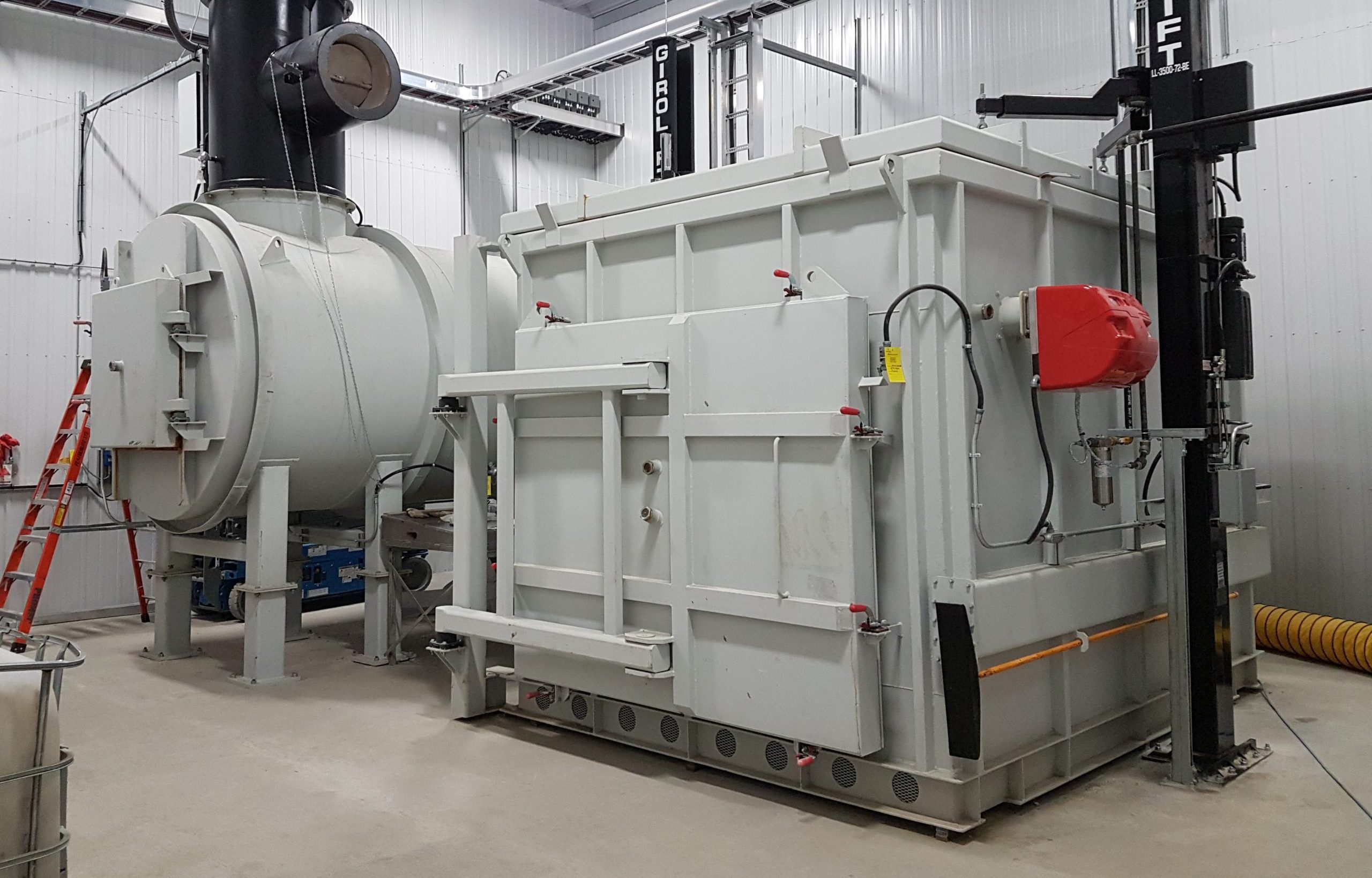
EWS animal incinerators use a controlled, two-stage, starved-air process. In the primary chamber, the load is burned gradually with limited air, minimizing disturbance of the material bed and helping control particulate carryover. Gases then enter a dedicated secondary combustion chamber, where added combustion air, high temperature, turbulence and sufficient residence time complete the oxidation process.
The secondary chamber is a true engineered chamber—not simply a small afterburner. Its volume, burner capacity, airflow and controls are selected to maintain the specified operating conditions and support destruction of smoke, odours, hydrocarbons and other products of incomplete combustion.
Depending on the application and governing standard, EWS can configure the secondary chamber for a minimum two-second gas residence time at 850°C for fuel-conscious operation and excellent combustion performance, or for higher temperatures up to 1,200°C. More demanding prion or biosecurity applications may require a specific temperature-and-time protocol, extended burnout cycle, fixed installation or additional validation. EWS engineers the system around those project-specific requirements.
BSE, CWD and other prion-risk materials
Bovine spongiform encephalopathy (BSE) and chronic wasting disease (CWD) are transmissible spongiform encephalopathies caused by abnormal infectious proteins known as prions. Prions are unusually resistant to conventional disinfection and many routine carcass-disposal processes. Burial and landfilling may isolate material but do not necessarily inactivate prions, making controlled incineration an important option where destruction is required.
USDA APHIS identifies incineration as a generally suitable disposal option for CWD-positive, suspect or exposed cervid carcasses and notes that onsite mobile incineration can reduce the risk of spreading contaminated material through transport. USDA guidance also emphasizes that prion destruction is difficult and that the selected method must comply with all federal, state and local requirements.
For BSE specified risk material and other high-consequence prion applications, EWS can provide higher-temperature and extended-hold configurations. The design basis must be confirmed with the responsible animal-health and environmental authorities because prion protocols differ from ordinary animal-cremation air-emission standards.
Demonstrated processing of bovine specified risk material
EWS has direct experience processing bovine specified risk material (SRM). In a performance test completed with Clearblu Disposal Services and the Ontario Ministry of Agriculture and Food, an EWS ECO model processed a 960 lb (435 kg), 44 ft³ SRM batch. The remaining ash was 80 lb and 7 ft³—representing a 92% reduction by weight and an 84% reduction by volume.
Ash from the SRM trial was tested for amino acids as a surrogate indicator for surviving protein. None were detected. Supporting results are available for qualified project review. This result should be understood as process-performance evidence, not as a universal certification of prion inactivation for every load or regulatory jurisdiction.
Controls, monitoring and options
- PLC-based automatic sequencing and burner management
- Temperature, combustion-air and process control
- Continuous recording of primary- and secondary-chamber temperatures
- Safety interlocks and controlled loading logic
- Optional oxygen, carbon monoxide and opacity monitoring
- Extended burnout and higher-temperature operating modes
- Fuel options selected for the site, including natural gas, propane or diesel where appropriate
- Loading aids for heavy or large carcasses
- Containerization, trailers, weather protection and remote-site packages
- Air-pollution-control and emissions-monitoring systems where required by the permit or waste stream
Fixed, containerized and mobile animal incinerator
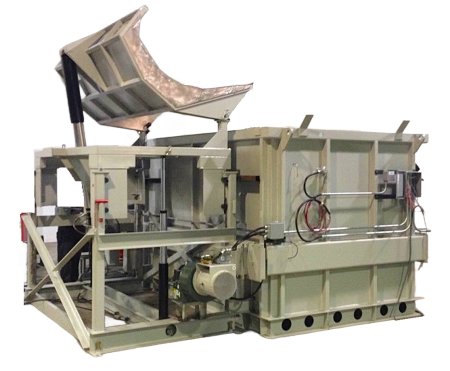
- On-farm animal incinerators provide local mortality capacity and reduce reliance on third-party collection, especially where distance, weather or disease controls make transport difficult.
- Permanent animal crematorium systems support veterinary laboratories, research campuses, quarantine facilities and centralized animal-health operations with predictable ongoing volumes.
- Containerized systems simplify transport and site integration while protecting equipment and controls from weather and unauthorized access.
- Mobile animal incinerators can be deployed between farms, outbreak locations or remote facilities and can reduce the movement of potentially contaminated carcasses.
Why organizations choose EWS
Animal incineration is not simply a matter of burner size. Successful projects depend on chamber design, refractory performance, airflow, temperature distribution, loading practice, controls, monitoring and the operating protocol. EWS brings decades of experience designing two-stage thermal treatment systems for remote sites, government facilities, defence users and regulated waste applications.
- Engineered two-stage combustion with a full-size secondary chamber
- Single-batch operation that avoids disturbing the load during combustion
- Designs tailored to whole carcasses, tissue waste, bedding and approved associated materials
- Capacity planning based on real animal weights, load condition and operating schedule
- Fixed, containerized and mobile options
- Documentation, operator training, commissioning and ongoing technical support
- Design support for site-specific regulatory and permitting requirements
Plan your animal incinerator project
Tell us what must be processed, where the system will operate and which authority will approve it. Our team can help define the required capacity, configuration, temperature-and-residence-time basis, site services, loading method, monitoring and documentation.
Contact Eco Waste Solutions to discuss an animal incinerator, animal cremator or animal crematorium for your farm, laboratory, quarantine facility, research program, wildlife operation or emergency-response plan.